 Wildlife Removal Kansas City
 Bat Removal in Kansas City: Exclusion Done Right
Last updated: September 2026
Price ranges are compiled from national cost data + published local pricing, September 2026 — see the cost page for methodology.
Kansas City Bat Removal Prices
Bat pricing scales with roofline length, stories, and how many secondary gaps need sealing — not colony size.
| Job scope | Typical price range | Notes |
|---|---|---|
| Inspection & assessment | Free – $150 | Includes a dusk watch or attic inspection to find entry points and estimate colony size |
| Single-entry exclusion (small job) | $300 – $600 | One or two active entry points on an accessible roofline |
| Whole-house bat exclusion | $500 – $2,000+ | One-way valves plus sealing every gap 3/8" and larger on the roofline — the standard job |
| Two-story / complex roofline | $1,500 – $3,000+ | Steep pitch, dormers and height add labor and safety setup; common in Brookside and Ward Parkway-area homes |
| Guano cleanup & insulation replacement | $500 – $3,000+ | Quoted separately; guano can harbor histoplasmosis spores, so this is a containment job, not a shop-vac job |
Signs of Bats in a Kansas City Home
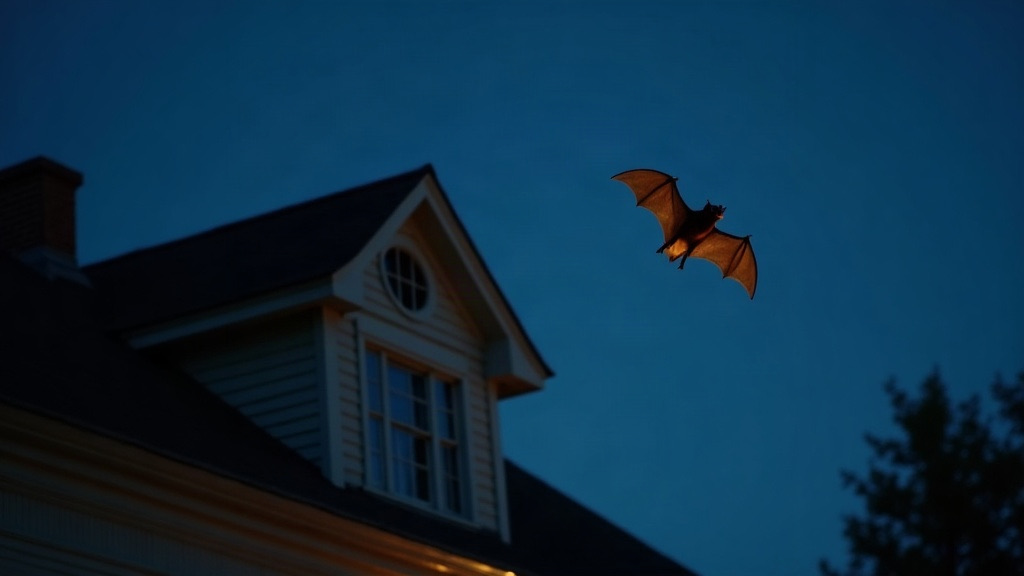
The classic signs: bats flying out of the roofline at dusk (the definitive confirmation — watch the house for twenty minutes after sunset in summer); high-pitched chirping and scratching in walls or the attic around dusk and dawn; guano — small, dark, crumbly droppings that sparkle with insect parts, accumulating on the ground below the entry point or in piles in the attic; and dark, greasy staining around the entry gap. Inside, a bat swooping through a bedroom at night usually means a roost in the attic or walls, not an open window.
One KC-specific note: big brown bats are the metro's usual attic species, and they need a gap of only 3/8 of an inch — the thickness of a pencil. The older the house, the more gaps: gable vents, soffit returns, chimney flashing and the joints where additions meet original construction in neighborhoods like Waldo, Brookside and Prairie Village.
Why Exclusion Is the Only Legal, Effective Method
Bats are protected and beneficial — a colony eats its weight in mosquitoes — and both Missouri and Kansas treat them accordingly. There is no legitimate "bat extermination": poisoning bats is illegal, traps don't work on a colony, and sealing the entry with bats inside kills them in your walls and leaves you with the odor and the next colony outside the same sealed hole.
One-way exclusion is the standard: the technician finds the active entries (often just one or two), installs a valve or netting that lets bats out at dusk but not back in, leaves it for several nights until the colony has exited, then removes the valve and seals the point — along with every other gap on the roofline, because bats return to the same structure for years. The seal-up, not the valve, is most of what you're paying for.
Maternity Season: The May–August Blackout
From roughly May through August, female bats gather in maternity colonies and give birth to pups that can't fly. Excluding a roost during this window traps the pups inside to die — inhumane, illegal in practice, and a guaranteed odor problem. Reputable Kansas City companies will inspect and plan during maternity season but schedule the actual exclusion for late August through fall, after pups fledge, or for early spring before they're born.
This makes autumn the busiest and best window for bat work in KC — conveniently the same season homeowners notice the problem, when cold October nights push bats to roost tighter against warm attic walls. If a company offers to seal your bat colony in June, that's a red flag, not a bargain. The full list of quote red flags is on our cost page.
Guano, Histoplasmosis and the Cleanup Question
Bat guano accumulates under a roost for years, and dried guano can harbor the fungus that causes histoplasmosis — a respiratory disease taken seriously in the Midwest, where the fungus is native to the soil. Small accumulations on a porch are a hose-and-gloves job; an attic with years of buildup is a containment cleanup with respirators, HEPA filtration and often insulation replacement.
Ask whether the exclusion quote includes cleanup, and insist it's priced separately so you can compare. Not every bat roost requires full insulation replacement — honest companies (several on our companies page make a point of this) will tell you when it doesn't.
Who Does Bat Exclusion in Kansas City
Bat work is a specialty within wildlife removal — ask specifically about bat experience, not just "wildlife." Catch-It Wildlife & Pest Control has decades of documented KC bat jobs and a biologist on staff; All Seasons Wildlife Removal states bat exclusion and bat-proofing as a core specialty; Critter Control of Kansas City Metro, AAAC Wildlife Removal, Frontier Trapper and Trutech all list bat exclusion. Profiles and published numbers: companies page.
Timing note for your calls: a good company will ask when you're seeing bats and may schedule the exclusion for the post-fledging window. That's competence, not stalling.
Frequently Asked Questions
How much does bat removal cost in Kansas City?
Whole-house bat exclusion typically runs $500–$2,000+, with two-story or complex rooflines reaching $1,500–$3,000+. Guano cleanup and insulation replacement are separate line items at $500–$3,000+. Inspections are often free from bat specialists.
Can bats be removed during summer in Kansas City?
Not during maternity season (roughly May–August), when flightless pups are in the roost — exclusion then traps them inside. Reputable companies inspect in summer and exclude in the late-August-to-fall window or early spring. A bat flying in your living space in July can be removed individually; the colony waits.
Is bat guano dangerous?
Accumulated dried guano can harbor Histoplasma fungal spores — histoplasmosis is a real Midwest concern. Don't dry-sweep or shop-vac an attic roost; disturbance is what aerosolizes the spores. Small fresh droppings on a porch are low risk; years of attic accumulation is a professional cleanup.
Will bats come back after exclusion?
Bats are faithful to roost sites — they'll return to the same house for years. That's why proper exclusion seals every gap 3/8" and larger on the roofline, not just the active entry. A job done this way, with a written warranty, holds; a one-hole patch doesn't.
Talk to a Kansas City Wildlife Specialist Now
No forms and no waiting for a callback — one call connects you with a wildlife removal specialist serving the Kansas City metro, on both sides of the state line.
Call (235) 200-214624/7 — speak with a local specialist now