 Wildlife Removal Kansas City
 Animals in Your Attic? The Kansas City Homeowner's Guide
Last updated: September 2026
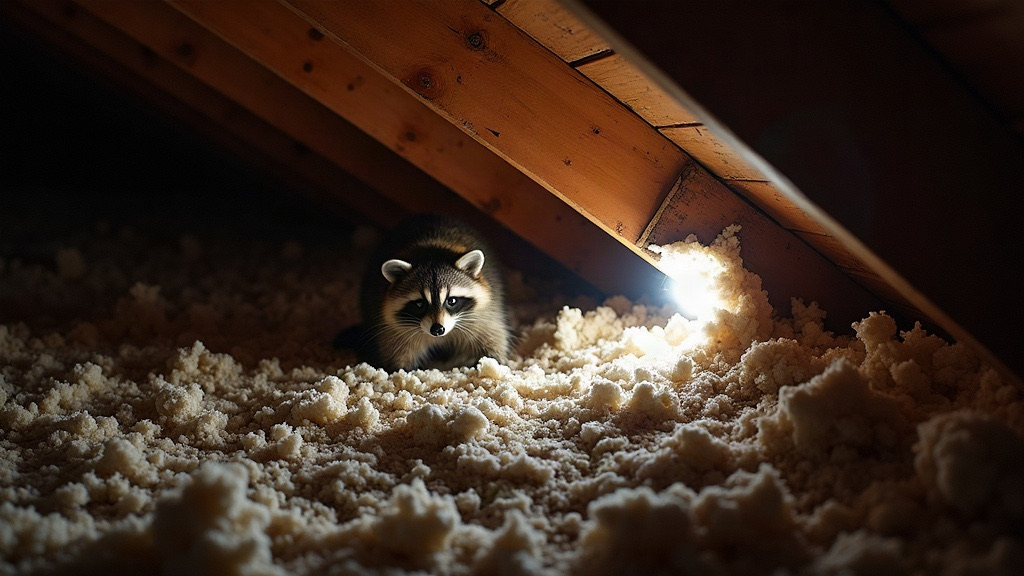
Step One: Identify What You're Hearing
You almost never see the animal first — you hear it, and the timing tells you most of what you need. Heavy, deliberate thumping at night: raccoons. They're 10–20+ pounds and nocturnal; kits add chittering and crying in spring. Fast scampering at dawn and dusk: squirrels — diurnal, quick, often with rolling sounds as they move nuts around. High-pitched chirping and fluttering at dusk, or scratching inside a wall: bats. Mice and rats are quieter: light scurrying at night plus rice-grain or olive-pit droppings at ground level.
Physical evidence confirms it. Check for the entry hole (softball-plus torn opening = raccoon; fist-sized gnawed gap = squirrel; pencil-width gap with dark staining = bats), droppings (raccoon latrines are concentrated; squirrel debris is scattered; bat guano crumbles and sparkles with insect parts), and rub marks where fur drags a repeated route. In October and November — KC's peak move-in season — check the roofline before you check the attic.
What to Do First (and What Not to Do)
First: keep people and pets away from the animal and its waste. Raccoon feces can carry roundworm, bat guano can carry histoplasmosis spores, and any raccoon, skunk or bat behaving strangely is a rabies suspect. Second: document — photos of entry damage and droppings help both the company you call and any insurance claim. Third: call for an inspection; wildlife specialists in KC often inspect free.
What not to do: don't seal the hole while anything might still be inside (a sealed-in animal dies in your wall or tears a new exit — see our exclusion page for the right sequence); don't put poison in the attic; don't try to grab a cornered raccoon; and don't assume the animal will leave on its own — in Kansas City's cold winters, attics are heated dens, and residents stay until spring.
The KC Wildlife Calendar
Kansas City's wildlife pressure follows the seasons closely. March–May: raccoon and squirrel birthing season — mothers in attics and chimneys with litters; removal must account for the young. May–August: bat maternity season — exclusion is off the table while pups can't fly; reputable companies inspect now and schedule the work for late summer. October–November: the big one. The first hard cold snaps send raccoons and squirrels into attics metro-wide — this is peak season for "animals in the attic" calls. Winter: residents stay put; skunks den up under decks and porches until spring.
The homeowner's move is to act against that calendar: preventive exclusion in late summer, branch trimming before October, and immediate action on the first fall sounds rather than waiting to "see if it goes away."
Two States, Two Rulebooks: Missouri vs Kansas
The metro straddles a state line, and nuisance wildlife rules differ by side. On the Missouri side, the Department of Conservation's Wildlife Code governs: landowners may address certain nuisance species on their own property, but relocation of trapped wildlife is restricted and some species have specific protections. On the Kansas side, the Department of Wildlife & Parks (KDWP) requires commercial nuisance wildlife damage control operators to be permitted — if your home is in Overland Park, Olathe or Shawnee, ask the company for its KDWP permit.
Practical constants on both sides: raccoons, skunks and bats are rabies-vector species with handling restrictions everywhere; bats get special protection during maternity season; and "trap it and drive it to a park" is restricted or illegal for good epidemiological reasons. When you get quotes, a company that can tell you which rules apply to your address is one that pays attention. Our companies page notes which operators cover both sides.
Free vs Paid: What the City Will and Won't Do
The most common misconception in KC wildlife: that the city handles it. KCMO Animal Services (operated with KC Pet Project) deals with domestic animals — stray and dangerous dogs, cruelty calls, pet licensing. It does not remove wildlife from private property: a raccoon in your attic, squirrels in your soffit or a skunk under your deck are the property owner's responsibility in both Missouri and Kansas. The same holds across the metro's municipalities.
The narrow free exceptions: dead animals on public streets and right-of-way (KCMO 311, or the equivalent in your suburb), and genuinely sick or injured wildlife in some jurisdictions. Everything else — live animals on your property, dead animals on your property — is private work. That's the honest answer to "free wildlife removal Kansas City": free help covers the street, not your attic. Private removal pricing is on our cost page.
Why KC's Older Neighborhoods Get Hit Hardest
Wildlife pressure isn't evenly distributed. The metro's pre-war and early-postwar housing stock — Waldo, Brookside, the Prairie Village–Fairway corridor, Roeland Park, the older Northeast — offers the densest supply of entry points: rotted soffits, gap-prone roof returns, original gable-vent screening, uncapped chimneys, and settling gaps where additions meet original structures. Combine that with mature tree canopy (the aerial highway onto every roof) and you get the metro's wildlife hotspots.
Newer construction further out — southern Overland Park, Lee's Summit's newer developments — isn't immune; it trades old-house gaps for builder-grade vent screens and construction-settling cracks. Either way, the fix is the same sequence: identify, remove, exclude, and clean up what was left behind.
DIY vs Professional: An Honest Line
Reasonable DIY: prevention. Trim branches six to eight feet off the roofline, cap the chimney, screen vents with hardware cloth, secure trash and pet food, bury mesh around the deck line, and walk the house every September looking for new gaps. A ground-level mouse or two with snap traps is also fair DIY territory.
Over the line into professional work: anything in the attic, anything with babies, anything involving a ladder on a two-story, any bat colony, any raccoon or skunk (rabies vectors), and any carcass inside a wall. These combine fall risk, disease exposure and legal handling rules — and the DIY failure mode (sealed-in animals, separated litters, sprayed homeowners) costs more than the original job. When you're at that line, the companies on our companies page are the comparison to start from.
Frequently Asked Questions
What is the scratching noise in my attic at night?
Timing identifies it: heavy thumping after dark is raccoons, fast scampering at dawn and dusk is squirrels, chirping and fluttering at dusk is bats, and light nighttime scurrying with rice-grain droppings is mice. The identification table above walks through it sign by sign.
How do animals get into Kansas City attics?
Through the roofline's weak points: rotted soffits, gap-prone roof returns, gable vents with failing screens, uncapped chimneys, and gaps where additions meet the original house. A raccoon needs a four-to-five-inch gap, a squirrel a fist-sized one, a bat just 3/8 of an inch — and KC's older homes offer all three.
Is there free wildlife removal in Kansas City?
Not for private property. KCMO Animal Services (with KC Pet Project) handles domestic animals, and KCMO 311 picks up dead animals on public streets and right-of-way — but live or dead wildlife on your property is the owner's responsibility in both Missouri and Kansas. Private removal pricing is on our cost page.
What should I do if I find baby animals in the attic?
Don't separate the family: sealing the entry or trapping the mother strands the litter, and the outcome is odor and more damage. Note where the nest is, keep pets and kids away, and call a company that hand-removes litters and reunites them with the mother outside. In May–August, bat pups mean exclusion has to wait until they fledge.
A bat is flying around my living room — who do I call?
A single bat in the living space can be removed any time of year (close it in one room, open a window at dusk, or call a wildlife company for same-day removal). If anyone may have been bitten or slept in the room with the bat, call the health department about rabies testing before releasing it. The attic colony behind it gets scheduled for the post-maternity exclusion window.
Sources
- Missouri Department of Conservation — nuisance wildlife provisions of the Wildlife Code
- Kansas Department of Wildlife & Parks — nuisance wildlife damage control operator permits
- KCMO Animal Services — scope of city animal services
- U.S. CDC — rabies vector species, raccoon roundworm (Baylisascaris) and histoplasmosis guidance
- Published pricing and cost-guide data, September 2026 (see cost page methodology note)