 Wildlife Removal Kansas City
 Wildlife Removal in Blue Springs, Missouri
Last updated: September 2026
Price ranges are compiled from national cost data + published local pricing, September 2026 — your actual quote follows an on-site inspection. Methodology on the Kansas City cost page.
The Lake-Country Effect: Why Pressure Stays High
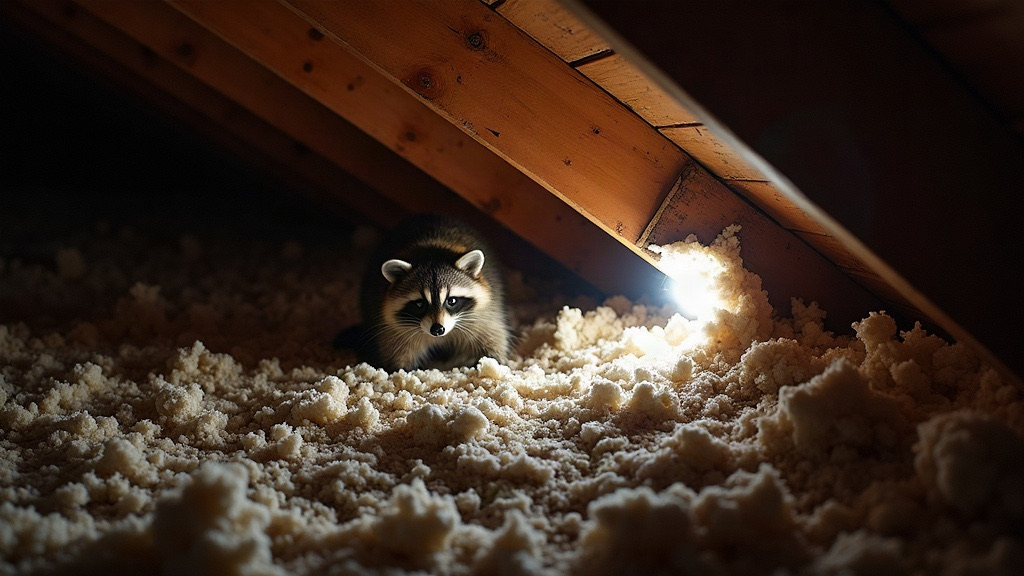
Blue Springs borders the metro's biggest block of public woodland and water — Fleming Park, Lake Jacomo, Blue Springs Lake, and the Burr Oak Woods conservation area. That green mass is a wildlife reservoir: raccoons, squirrels, skunks, opossums and groundhogs breed in the woods and forage in the adjoining neighborhoods, and homes on wooded lots sit at the front line.
The housing itself is mostly mid-century ranches through 1990s–2000s subdivisions. The older stock carries the usual pre-war-adjacent entry points — soffit gaps, roof returns, original vent screens — while newer homes contribute builder-grade vent covers and settling cracks. Add branches overhanging most rooflines and you have the metro's complete raccoon-and-squirrel recipe.
What Blue Springs Homeowners Actually Call About
Squirrels in the attic lead the list — dawn-and-dusk scampering, fist-sized chewed entries at roof returns and gable vents. Raccoons spike twice: the October–November cold transition and the March–May denning season, when mothers tear through weak soffits to reach attic nurseries. Skunks den under decks, porches and sheds year-round, with February–March breeding season the peak for spray incidents involving dogs.
Groundhogs burrow along foundations and shed lines on the wooded edges of town, and bats (big browns) roost in gable vents of the older housing — with the May–August maternity-season pause on any exclusion. Identify what you're hearing with our attic guide; honest price ranges are on the cost page.
Hiring a Company for Blue Springs
Blue Springs is Missouri-side: nuisance wildlife work runs under the Missouri Department of Conservation's Wildlife Code, relocation of trapped wildlife is restricted, and rabies-vector species (raccoons, skunks, bats) have handling rules. City animal control handles domestic animals — wildlife on private property is the owner's responsibility, which is what private operators are for.
The established KC-metro companies cover Blue Springs routinely. Published phone numbers, listed services and coverage are on our companies page; the comparison table is on the home page. Ask each bidder for the written entry-point list and named seal-up materials — the two things that make quotes comparable.
Frequently Asked Questions
How much does wildlife removal cost in Blue Springs, MO?
Most single-animal jobs — raccoon, squirrel, skunk — run $200–$600 for trapping and removal. Whole-house bat exclusion typically runs $500–$2,000+, full exclusion seal-up $300–$2,500+, and attic cleanup after heavy contamination adds $500–$3,000+.
Does Blue Springs Animal Control pick up raccoons?
No — animal control handles domestic animals. Wildlife on private property (attic, deck, walls, yard dens) is the property owner's responsibility under Missouri rules and is handled by private wildlife removal companies.
Why do wooded lots in Blue Springs get more raccoons?
Tree canopy is a raccoon highway: branches overhanging the roof put the attic entry points within a short jump, and the lake-country woods keep the breeding population dense. Trimming limbs six to eight feet back from the roofline is standard prevention here — but an open entry point defeats even a trimmed yard.
When is the worst season for attic animals in Blue Springs?
October–November, when the first hard cold snaps push raccoons and squirrels into attics metro-wide — wooded-edge neighborhoods feel it first. Spring (March–May) is the second peak: denning mothers with litters, which raises both the stakes and the price.
Talk to a Kansas City Wildlife Specialist Now
No forms and no waiting for a callback — one call connects you with a wildlife removal specialist serving the Kansas City metro, on both sides of the state line.
Call (235) 200-214624/7 — speak with a local specialist now