 Wildlife Removal Kansas City
 Wildlife Exclusion & Prevention in Kansas City
Last updated: September 2026
Price ranges are compiled from national cost data + published local pricing, September 2026 — see the cost page for the full breakdown.
Kansas City Exclusion Prices by Component
Most jobs combine several components; the per-item ranges below are for orientation, and whole-house quotes bundle them.
| Component | Typical price range | Notes |
|---|---|---|
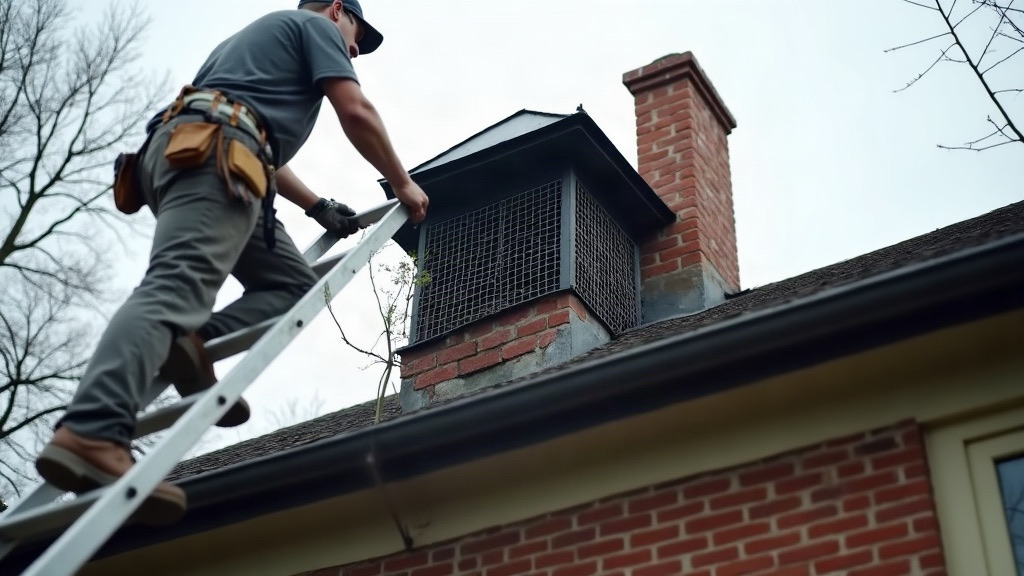
| Chimney cap installation | $150 – $400 per chimney | The single highest-value exclusion item; raccoons treat uncapped chimneys as hollow trees |
| Vent covers (gable, roof, dryer) | $75 – $250 per vent | Purpose-built covers, not window screen — squirrels chew through light screen in days |
| Soffit & roof-return repair | $300 – $1,500 | The #1 entry zone in KC's pre-war housing; carpentry plus mesh |
| Buried deck/porch barrier (skunks, groundhogs) | $150 – $500 | L-shaped steel mesh a foot underground around the structure — see our skunk page |
| Whole-home seal-up (all entry points) | $300 – $2,500+ | Driven by stories, roofline complexity and the number of gaps found at inspection |
| One-way doors / exclusion valves | Included in removal | Temporary devices that let animals out but not in; removed after seal-up |
What Exclusion Actually Is (and Isn't)
Exclusion is structural pest control: find every gap an animal can use — or could use next season — and close it with material that animal can't defeat. It is not stuffing holes with steel wool and spray foam (squirrels and raccoons treat expanding foam as a mild inconvenience), not hanging a repellent, and not trapping the current tenant while leaving the door open.
A professional exclusion job starts from the inspection's entry-point list and works the whole structure: roofline, vents, chimney, soffits, foundation, deck line, utility penetrations and garage. The output is a sealed house plus a written warranty — typically one year, renewable — that defines what happens if an animal gets back in.
The Entry Points KC Homes Almost Always Have
Inspectors in Kansas City find the same list on pre-war homes across Waldo, Brookside, Prairie Village, Roeland Park and the older Northeast: roof returns (the gap where eave meets wall), rotted or gap-prone soffit boards, gable vents with original wood-framed screen, uncapped chimneys, deteriorated ridge and roof vents, and the joints where additions meet the original house. Below grade: open crawl-space vents, gaps at utility penetrations, and unprotected deck and porch undersides.
A raccoon needs a four-to-five-inch gap, a squirrel a fist-sized one, a bat three-eighths of an inch, a mouse a dime. Older KC homes routinely present all four menus at once — which is why a serious exclusion quote on a 1920s two-story is a bigger number than on a 1990s ranch, and why the inspection, not the phone call, produces the price.
Materials: What Survives a Raccoon
The material list separates real exclusion from patch work. Heavy-gauge galvanized or stainless steel mesh (hardware cloth, 1/4–1/2 inch) for vents and soffit gaps. Metal flashing for roof returns and junction gaps. Purpose-built vent guards and chimney caps — the stamped-metal kind rated for wildlife, not hardware-store dryer covers. Mortar and masonry repair at foundation level. Foam is acceptable only as a filler behind a mesh or metal layer, never as the barrier itself.
Ask every bidder one question: "What material goes on each entry point?" The answer should be specific and written into the quote. This single question filters out most low-quality bids — more on comparing quotes on our cost page.
Exclusion Timing Around KC's Wildlife Calendar
Two timing rules govern exclusion work here. Bats: no sealing of active roosts during maternity season (roughly May–August) — pups can't fly, and exclusion must wait for the post-fledging window or early spring; details on our bat page. Everything else: never seal a structure until removal confirms it's empty — a sealed-in raccoon or squirrel does catastrophic damage trying to get out, or dies in a wall and hands you a dead animal problem.
The strategic window for preventive exclusion — sealing a house that has no current animals — is late summer through September, before the October–November cold pushes raccoons and squirrels toward every unsealed attic in the metro. Fall-excluded homes simply don't get the November call.
Who Does Exclusion in Kansas City
Exclusion capability is the criterion we weight heaviest in our company list. Critter Control of Kansas City Metro lists vent guards, chimney caps and roof/soffit repair alongside removal; Catch-It Wildlife & Pest Control and Frontier Trapper pair exclusion with insulation replacement; AAAC Wildlife Removal does entry-point sealing and damage repair; Trutech builds its KC service around the inspect-trap-exclude sequence. Profiles and published phone numbers are on the companies page and the home page comparison.
Frequently Asked Questions
How much does wildlife exclusion cost in Kansas City?
Whole-home exclusion typically runs $300–$2,500+, driven by the number of entry points, stories and roofline complexity. Individual components price lower: chimney caps $150–$400, vent covers $75–$250 each, buried deck barriers $150–$500.
Is exclusion worth it if I only have one animal?
Yes — the entry point outlasts the animal. KC's fall pressure means an open gap is reoccupied within weeks in most neighborhoods. Exclusion converts a recurring trapping bill into a one-time fix, which is why it's the line item to spend on.
What does an exclusion warranty usually cover?
Typically re-entry through the sealed points for one year, often renewable annually. Read what's excluded: most warranties don't cover animals chewing brand-new holes elsewhere on the structure — which is the argument for sealing every gap, not just the active one.
Can I do exclusion myself?
Ground-level pieces — deck barriers, vent screens, garage door seals — are reasonable DIY with proper materials. Roofline work on a two-story is ladder work with real fall risk, and a missed gap voids the whole effort. Most homeowners DIY the ground level and hire the roofline.
Talk to a Kansas City Wildlife Specialist Now
No forms and no waiting for a callback — one call connects you with a wildlife removal specialist serving the Kansas City metro, on both sides of the state line.
Call (235) 200-214624/7 — speak with a local specialist now